
Guide · Rappelling
What is rappelling? How it works and how to do it
Rappelling is how you get down something steep on a rope, under control. Here's how it works, what the gear does, how to move, and how guides keep it safe, from someone who has put more than 15,000 people on rope.
What rappelling is
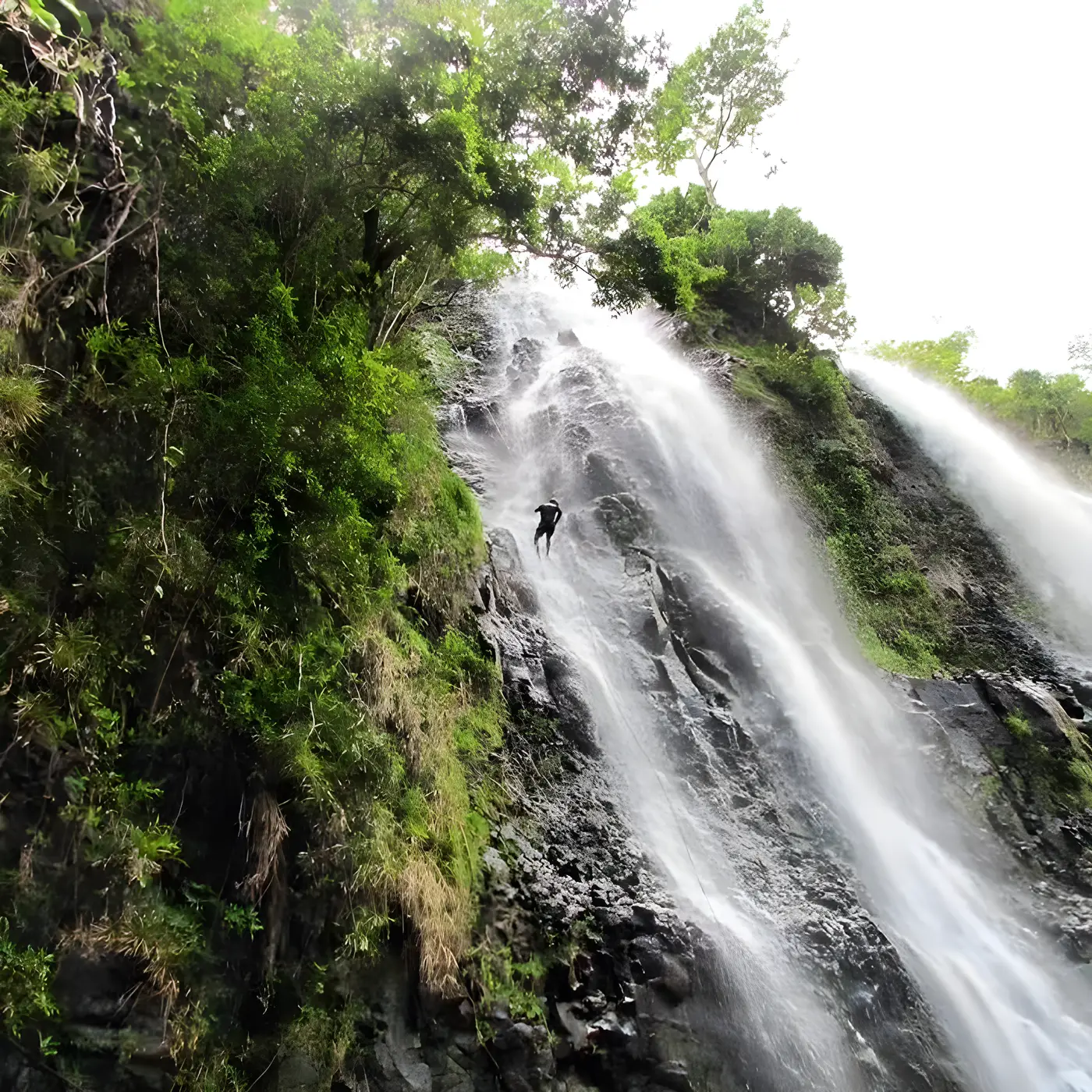
Rappelling is descending a cliff, wall or waterfall on a fixed rope, using friction to control your speed. The rope is anchored at the top. It runs through a device on your harness that creates friction, and one hand, your brake hand, adjusts that friction. Squeeze the rope and you slow or stop; ease off and you move down.
Climbers use rappelling to get down after a climb. Canyoneers use it to descend waterfalls and drops in a canyon. Rescue teams and the military use it to reach people and places fast. And for most people, it's a once-in-a-lifetime adventure: stepping backward off an edge and finding out the rope really does hold you.
Rappel, abseil or repel?
Rappel is the American word, from the French rappeler, "to recall," originally about pulling the rope down after you. Abseil is the same thing in British and European English, from the German abseilen, "to rope down." There's no difference in technique.
Repel is a different word that means to push away. You rappel down a cliff; insect spray repels mosquitoes.
How a rappel works
- The anchor. At the top, the rope is attached to strong anchor points: bolts in the rock, or large living trees. A good anchor is redundant, so if one piece failed, another still holds.
- The rope. A low-stretch rope runs from the anchor down the face. Static rope is used for rappelling because it doesn't bounce.
- The device. The rope passes through a rappel device clipped to your harness. Bends in the rope create friction, so the device carries most of your weight.
- The brake hand. Your dominant hand holds the rope below the device. Pulling it back increases friction and slows you; letting it forward lets rope slide through.
- The backup. On guided rappels, a second person holds the bottom of the rope (a fireman's belay) or a friction hitch backs you up. If you let go, you stop.

The gear
- Harness: a seat of webbing around your waist and legs. It's what connects you to the system, so it has to fit snugly.
- Helmet: protects you from falling rock and from bumping the wall. Non-negotiable.
- Rappel device: a metal friction device such as a tube, figure 8 or rack. Canyoneers often use devices that let them change friction mid-rappel on wet rope.
- Locking carabiner: connects the device to your harness. The gate screws shut so it can't open by accident.
- Rope: static or low-stretch, inspected before every use and retired on a schedule.
- Gloves and shoes: gloves keep your hands comfortable; grippy shoes keep your feet planted on the wall.
On a guided trip, all of this is provided and fitted for you. Full breakdown in rappelling gear: what you actually need.
How to rappel: technique
Rappelling feels backward at first, and that's the point: your instinct says lean in toward the wall, and the technique says lean out.
- Lean back into an L. Sit into the harness so your body forms an L with your legs, feet flat against the wall. The more you trust the rope, the easier it gets.
- Feet shoulder-width apart. A wide stance keeps you stable and stops you from spinning sideways.
- Walk backward, small steps. Feed rope with your brake hand as you go. Look over your shoulder to see where you're stepping.
- Stay in the fall line. Go straight down from the anchor. Drifting sideways causes swings and rope wear.
- Never let go with the brake hand. Your other hand can rest on the rope above the device for balance, but the brake hand stays on.
- Overhangs: drop your hips a little lower, let your feet walk off the edge, and lower smoothly until your feet find rock again.
The most common beginner mistake is leaning in and trying to hug the wall. Your feet slip out and you end up on your knees. Lean back, trust the gear, and it suddenly feels easy.
How rappelling is kept safe
Most rappelling accidents come from a small number of mistakes, and professional systems are designed around each one:
- Anchor failure: redundant anchors, inspected every time.
- Rappelling off the end of the rope: stopper knots in the rope ends, and ropes measured to reach the ground.
- Losing control: a fireman's belay from below or a friction-hitch backup on every descent.
- Getting stuck: hair, clothing or straps caught in the device. Guides check you before you go and rig "releasable" systems so they can lower you.
- Rockfall and water: helmets always, and weather and stream checks before rappelling waterfalls.
- Gear wear: ropes, harnesses and hardware logged and retired on schedule.
That's why beginners should rappel with a qualified guide or instructor. The skills look simple, but the rigging and the judgment are where the safety is.
Where people rappel
- Cliffs and crags: climbers rappel to descend after a route.
- Waterfalls: guided waterfall rappelling, the most beginner-friendly way to try it with the biggest wow factor.
- Canyons: canyoneering links rappels, hiking, swimming and scrambling through a whole canyon.
- Towers and buildings: training towers, charity "over the edge" events, rope access work and rescue training.
How to learn
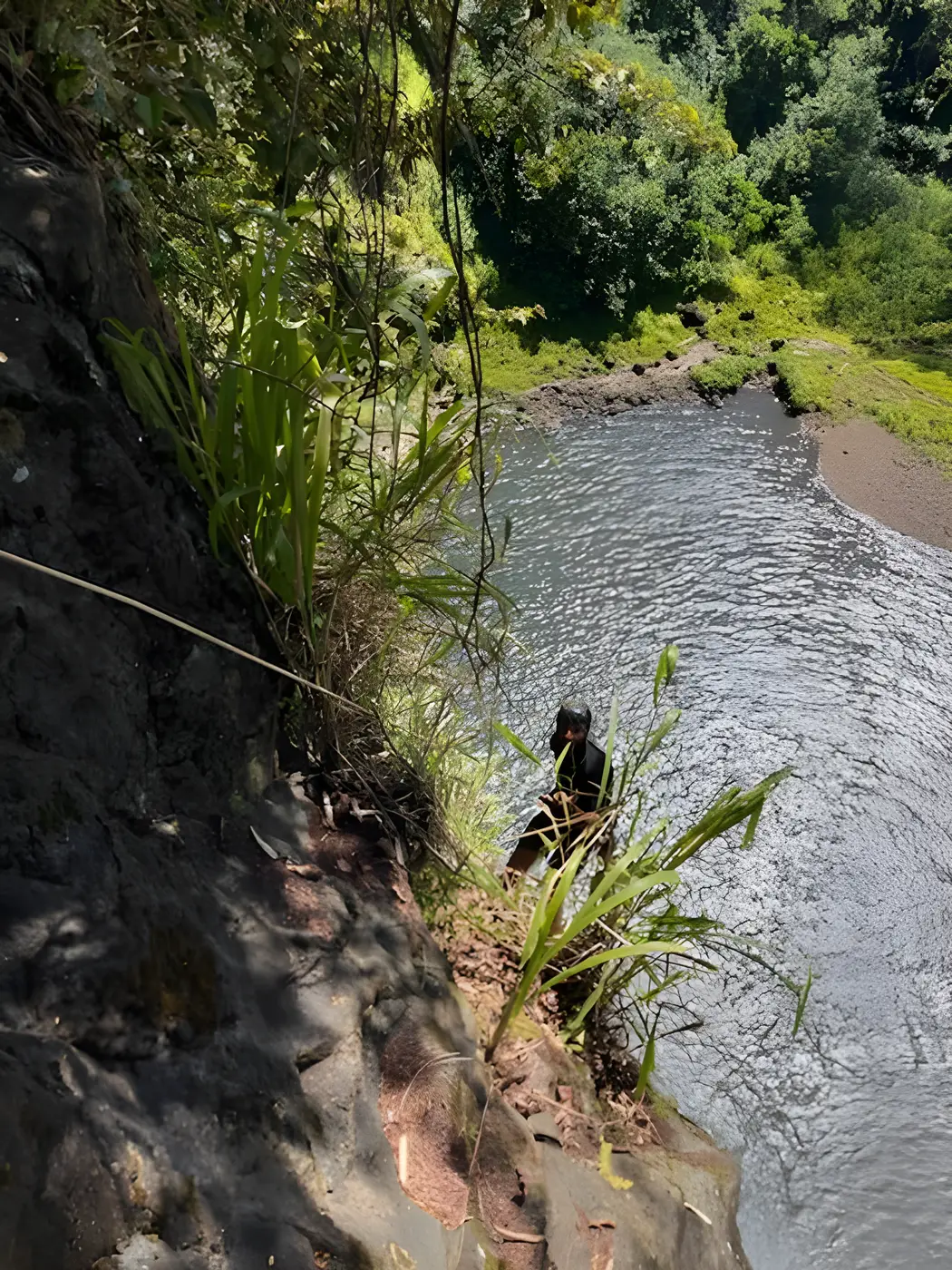
Try it: a guided waterfall rappel is the easiest way. Gear, ground school and a backup are all handled; you just learn to walk backward off the edge. We run private waterfall rappel trips on Kauai for every level.
Learn it properly: to rappel on your own, take a course that covers anchors, rigging, backups and self-rescue, and practice under supervision before going independent. Our Canyoning Basics and High-Angle Techniques courses cover exactly that.
Questions
Is rappelling dangerous?
Done with good anchors, proper gear, a backup and trained people, it's very safe. Accidents usually come from skipped checks: weak anchors, ropes too short, no backup, or no helmet.
Is rappelling hard for beginners?
No. Most people learn the basic technique in a few minutes. The hard part is trusting the rope for the first step over the edge.
Do you need upper body strength to rappel?
Very little. The device and harness carry your weight. Your legs walk you down, and your brake hand just controls the rope.
What's the difference between rappelling and climbing?
Climbing is going up; rappelling is coming down on a fixed rope. Climbers often rappel at the end of a climb.
Is it rappel or repel?
Rappel. "Repel" means to push away. In British English, rappelling is called abseiling.