
Waterfall rappelling
Walking backward down a waterfall on a rope, with the water pouring around you. Here's how it works, what it feels like and how to do it safely, from a guide with 14+ years and 15,000+ guests on rope.
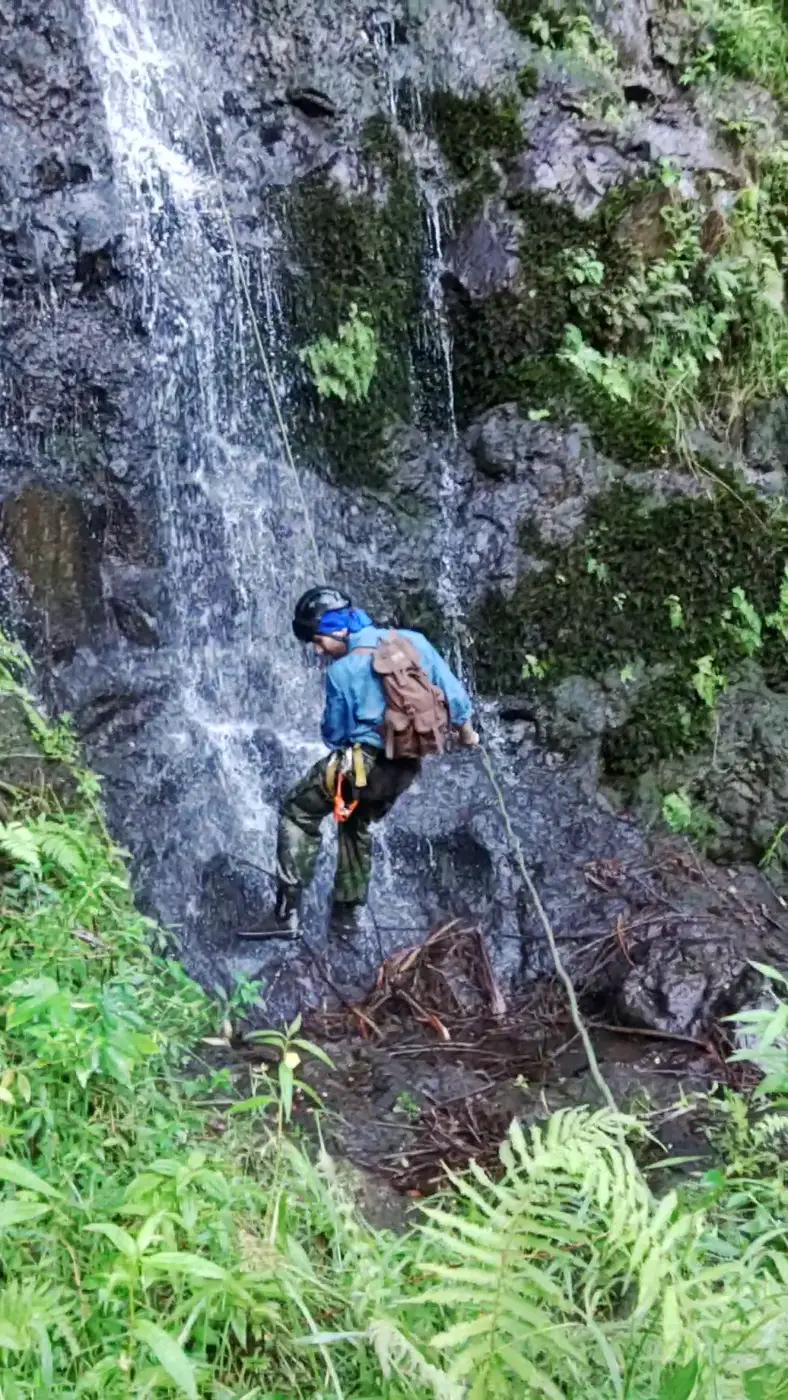
How waterfall rappelling works
New to rappelling in general? Start with what rappelling is and how it works.
A rope is anchored at the top of the waterfall. You wear a climbing harness and helmet, and the rope runs through a rappel device clipped to your harness. Your brake hand controls the friction, so you choose how fast you go: slow and steady, or a little bolder once you trust it.
You lean back until your body is roughly an L shape, feet flat on the rock, and walk backward down the wall. On a waterfall the rock is wet and the water pushes on your helmet and shoulders, which is exactly what makes it fun.
On a guided trip a second guide stands at the bottom holding the end of your rope. That's called a fireman's belay: if you let go or slip, they pull the rope tight and you stop. You're never relying on yourself alone.
What it feels like
The first step over the edge is the hardest part. Once your feet are on the wall, most people feel the nerves turn into focus, then into fun. Halfway down you're inside the sound of the water, and at the bottom you drop into a cool pool in the jungle. It's one of the few adventures that's genuinely thrilling and genuinely beginner-friendly at the same time.
Is waterfall rappelling safe?
With trained guides and good systems, yes. The real risks are anchors, equipment, slippery approaches and flash floods, and each one has a control:
- Anchors: redundant, equalized anchors, inspected before every trip.
- Equipment: rated harnesses, helmets and ropes, logged and retired on schedule.
- Backup: a belay from below on every descent, and releasable rigging so the guide can lower you if needed.
- Water: weather and stream checks before and during the trip, with clear cancel rules for flash-flood risk.
- People: guides trained in wilderness first aid and rope rescue.
Ask any operator about those five things before you book. A good one answers without hesitating.
What to wear and bring
- Clothes that can get wet and dirty. Quick-dry is best; skip cotton jeans.
- Shoes with grip that can get soaked, or water shoes (many operators provide them).
- Hair tied back, no loose jewelry, glasses on a strap.
- A towel and dry clothes for after, plus sunscreen and bug spray.
Waterfall rappelling vs. canyoneering
Waterfall rappelling is usually one or two guided rappels at a single site. Canyoneering is the bigger version: traveling down a whole canyon by hiking, scrambling, swimming and rappelling, often with several drops. Many people start with a waterfall rappel and catch the bug.
Where to go waterfall rappelling with us
Kauai, Hawaii
Private, custom waterfall rappel trips in the jungle, for every level. Plus our guide to Kauai waterfalls.
See Kauai tripsMore locations
We're working with landowners and operators to open new waterfall sites. Get notified.
Own a waterfall or run a tour?
We help landowners and operators open waterfall rappel sites the right way: route and anchor design, trails, safety systems, insurance-ready manuals and guide training.
Quick answers
How much does waterfall rappelling cost?
Group tours usually run a few hundred dollars per person. Private trips are quoted per group and depend on length and group size.
Do I need to be strong?
No. Your legs do most of the work and the rope holds your weight. You need to be able to walk a rough trail and hold a rope.
Is there an age limit?
Most operators start around 8 to 12 years old, with weight limits for the harnesses. Always check before booking.